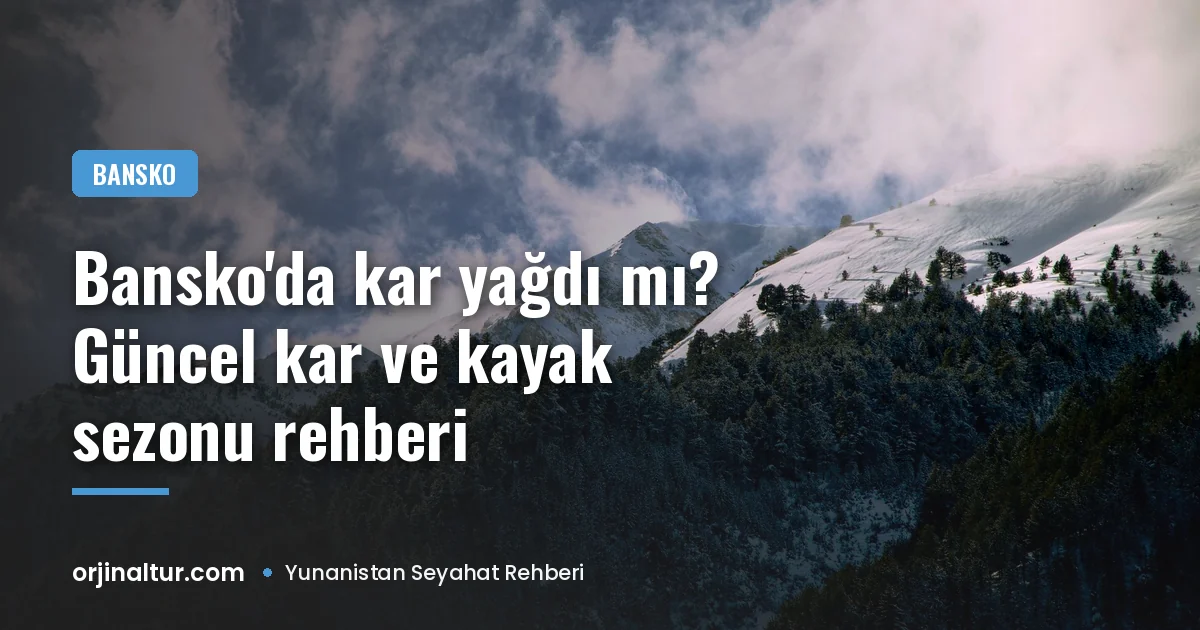
Has it snowed in Bansko? Current snow and ski season guide
Published: Updated: 9 min read
Short answer
Whether it has snowed in Bansko depends on the date and altitude. In the official Bansko Ski check dated 26 September 2026, the snow depth for Bansko, Banderishka Polyana and Todorka was 0 cm. In winter, snow depth, open pistes, lifts and the short-term weather forecast should be checked together before travelling.
Key points
Snow conditions can differ between the town centre and the high slopes in Bansko.
Snow depth alone does not show that skiing is possible; open lifts and open runs must also be checked.
The ski season is generally planned from December to spring, but dates change with conditions.
The official Bansko Ski report should be checked again close to the travel date.
The most reliable way to tell whether it has snowed in Bansko is to check the ski resort’s current snow depth and open-slope information. In the check dated 26 September 2026, the official Bansko Ski page showed a snow depth of 0 cm for the centre, Banderishka Polyana and Todorka. This data is normal for the off-season; during winter, precipitation and slope conditions can change from day to day.
Is it snowing in Bansko right now?
Judging whether it is snowing in Bansko by looking only at the town centre is not a reliable approach. The town of Bansko lies at a lower altitude, while the ski areas are at higher elevations towards Todorka and Banderishka Polyana. For this reason, it may be raining in the centre while there is snow at the top stations, or there may be snow in the centre while the slopes have a different surface condition.
The official Bansko Ski data on the day of the check showed a 0 cm snow cover for three measurement points. This did not mean that skiing was possible at that moment, nor does it mean that there will be no snow throughout the winter. For a daily decision, snow depth, open lifts and open runs should be checked together.
When does the snow season start in Bansko?
In Bansko the ski season is generally planned from December until early spring, but opening and closing dates change according to snow conditions, temperature and operational decisions. On the highest runs winter conditions can last longer, while at lower sections snow quality can change more quickly on sunny and mild days.
Travellers going in December should bear in mind that the season has only just started, while those going in March and April may find better conditions on the upper runs. This is not a guarantee. Before fixing your reservation dates, check the official piste and lift status again, especially for short weekend breaks.
Where can I check the snow depth in Bansko?
The first source for snow depth is the official snow cover page of Bansko Ski. This page may show different points such as Bansko, Banderishka Polyana and Todorka separately. It is necessary to read not only a single figure, but also the measurement point and the time of the update.
The same check should also cover whether the lifts are operating and whether the runs are open. Even if it has snowed, some lifts may be closed due to wind, icing, poor visibility, maintenance work or technical reasons. An old photo shared on social media is no substitute for an up-to-date piste report.
For the weather forecast, follow short-term forecasts close to your travel days as well. In mountainous areas, a height difference of a few kilometres and slopes exposed to the sun can change the outcome. Do not treat the town weather and the ski area report as the same data.
If there is no snow, is a Bansko ski holiday cancelled?
This decision depends on the date of travel and the purpose of the holiday. If skiing is the main goal, booking non-refundable reservations without seeing sufficient conditions in the piste and lift report is risky. On the other hand, Bansko’s old town, restaurants, spa hotels and the views of Pirin can be planned for a non-skiing weekend as well.
Snow falling shortly before your trip is not sufficient on its own. The preparation of new snow on the runs needs to be assessed together with temperature and lift operation. For beginner skiers, the availability of open and well-maintained easy runs is a more practical indicator than the total snow depth.
When choosing accommodation, compare the travel time to the ski area, the availability of equipment rental and alternatives such as an indoor pool or spa. When looking at options such as the Vihren Palace Ski & Spa Resort in Bansko, which focuses on skiing and relaxation, confirm the lift connection and seasonal services directly with the hotel.
How many days are enough for skiing in Bansko?
For a first-time visitor, two nights and three days is a practical start for getting to know Bansko’s slopes and the town centre. On the first day you can get used to the equipment and the layout of the runs, on the second day ski for longer, and on the third day plan a flexible programme depending on the weather and snow conditions.
A four- or five-day trip gives more flexibility against changes in the weather. If the lifts slow down on a day due to heavy snow or fog, the whole holiday plan is not ruined. For families with children and beginners, lesson times, rest breaks and transfer time should also be taken into account.
If snow conditions are poor, instead of cancelling the programme completely, you can postpone the skiing day and plan a city tour, a spa visit or a restaurant route. A flexible distribution of days is the most practical way to reduce weather risk on a short holiday.
Do I need snow equipment when going to Bansko?
Visitors who do not bring their own equipment can rent skiing and snowboarding gear in Bansko; however, during busy periods the choice of size and model may be limited. A helmet, suitable layered clothing, waterproof gloves and sun protection are the basic preparations.
If snow is expected, consider winter conditions for the transfer between cities and the mountain journey. Those driving a rental car must check the tyres, snow chains, parking and road conditions before the trip. Since the weather on the mountain can change quickly, dressing only for the temperature in the town centre will not be enough.
If your skiing level is beginner, ask whether the equipment rental fee includes lessons, lockers or transfers. Prices and opening hours may change, so confirm with the relevant facility before booking. To compare hotel and location options in Bansko, you can browse the Orjinaltur hotels page.
Final checklist for a snowy holiday in Bansko
48 to 72 hours before setting off for Bansko, check the official snow cover page, the lift and piste status, the short-term weather forecast and the travel conditions together. Even if snow has started to fall, time is needed to prepare the pistes before they can open. For this reason, “it is snowing” and “skiing is possible” are not the same thing.
Check the snow depth together with the measurement point.
Review the number of open lifts and open runs.
Separate the weather in the town centre from the weather at the top station.
Ask about the flexibility of accommodation and transfer conditions.
Confirm equipment, lesson and children’s services in advance.
If current conditions are favourable, moving your ski days forward or back according to the weather gives the best result. If conditions are poor, Bansko can be enjoyed for its spa, food and town atmosphere; however, if you are going only for skiing, read the cancellation and change rules in advance.
What is the difference between snowfall in Bansko and slope conditions?
Snow falling at a ski resort does not mean that all the pistes are ready at the same time. The amount of precipitation as well as temperature, wind, humidity and piste maintenance work determine the outcome. Light snowfall can whiten the landscape, but creating a safe and regular surface for skiing can take longer.
Especially at the start of the season, there may be sections where natural snow and artificial snow are used together. This helps some runs stay open, but it does not mean that the whole mountain is in the same condition. For beginners, the condition of the easy runs used by instructors may matter more than the advanced routes. Families should choose runs according to the age and experience of their children.
Wind is also a significant factor in Bansko. Visibility can decrease on the upper stations, or some lifts may be temporarily halted. On a day that looks sunny in town, there may be fog and strong wind on the mountain. Plan your skiing based on the piste report and lift operating status, not just the rain symbol on the forecast.
What information should I note while following the snowfall?
When following snow conditions, noting the same four pieces of information every day makes decisions easier: the measurement point, snow depth, open lifts and open runs. You can add the short-term temperature and visibility forecast to this. Check the update time on the page so you do not treat the previous day’s data as today’s conditions.
When making accommodation and transport bookings, do not use this data alone as a guarantee. The operating schedule of ski resorts can change due to technical maintenance, safety or weather conditions. Read the cancellation or date change conditions of hotels, transfer companies and equipment rental businesses. That way, if there is less snow than expected, your alternative plan is ready.
For first-time visitors to Bansko, the most practical plan is to check the official report a few days before the trip, look again the day before arrival, and confirm the lift opening every morning. This approach gives a more reliable decision than old photos or general town forecasts.
For a visitor looking for snow in Bansko, the right question is not just “did it snow?” The questions “how many centimetres of snow are there at which altitude, which lifts are open, and which runs are safe today?” should be answered together. This distinction sets expectations correctly and makes your holiday more resilient to changes in the weather.
Snowfall in Bansko mostly occurs during the winter months, and ski plans are usually made from December until early spring. Since the exact snow situation varies by year, altitude and temperature, check the official piste report close to your travel date.
Can you ski in Bansko if there is no snow?
If the snow depth is insufficient or the pistes are closed, skiing is not possible. At certain times the higher runs may be in good condition while there is no snow in the centre. For this reason, look at the official lift and piste status, not only the view of the town centre.
Where can I find the most reliable information on snow conditions in Bansko?
The most reliable starting point is the snow cover, lift and piste information on Bansko Ski’s official website. You should also check the weather forecast close to your travel date; social media photos and old user posts do not guarantee current conditions.
How many days should I plan for a ski holiday in Bansko?
Two nights and three days is a practical length for a first visit. A four- or five-day plan gives more flexibility against fog, heavy snow or lift closures. Families with children should also plan lesson and rest times separately.
Can I rent ski equipment in Bansko?
Ski and snowboard equipment can be rented in Bansko; during busy periods the choice of size and model may be limited, so early confirmation is helpful. Ask the chosen business about a helmet, waterproof clothing and equipment pick-up times.